Neo Deco

Neo Deco is one of Pinterest’s named trends for 2026, and its appeal is easy to understand. Richer woods, decorative metalwork, coloured glass, scalloped shapes and deeper upholstery are appearing together again, bringing some of the glamour of Art Deco into rooms that are otherwise much less formal.

The most useful version of the look is selective. A room can take a scalloped mirror, a dark timber table and an emerald cushion without needing to become a complete 1930s interior.

The palette does much of the work: walnut and dark brown, emerald and cobalt, aubergine, burgundy, aged brass and the occasional flash of gilt.

Dark wood
Dark timber gives the look its weight.

The walnut-toned acacia and compact cabinet form give you the darker wood note while still feeling collected and substantial, particularly alongside brass, coloured glass and jewel-toned textiles.
For vintage, a dark wooden surface is also the ideal place for coloured glass or iridescent ceramics because it gives translucent objects more contrast.

Hand-carved from a single block of dark tropical hardwood, the Lara Bowl has an uninterrupted grain and a sculptural crescent-shaped pedestal. Its dark timber, polished surface and sweeping curved form give the smaller decorative object the same weight and geometry that Neo Deco uses in furniture.
Aged brass
Brass works best here when it looks warm rather than overly polished.

Hand-cast with an aged brass finish, the Rasan has a tactile, substantial surface that feels more collected and less polished than a sleek contemporary brass lamp.

The Callaghan pendant uses antique brass and ribbed glass in a simple hanging form that brings the same material palette to overhead lighting. Its combination of reflective metal, textured glass and controlled geometry works especially well above dark wood furniture or alongside richer jewel tones.
Jewel tones
Deep green, burgundy and cobalt are particularly effective against dark timber and brass because they give the room colour without making it feel light or sugary.
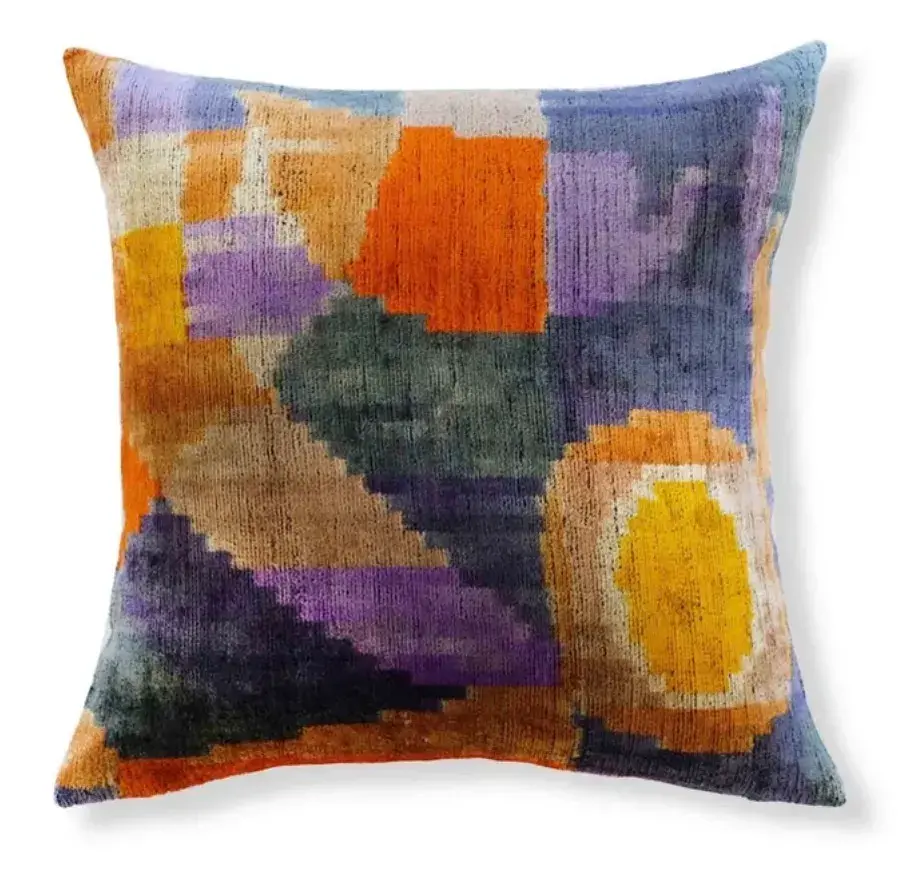
LOOMY Izzo Silk Ikat Pillow - £134
Handwoven in Tashkent from 90% silk and 10% cotton using traditional resist-dyed ikat techniques, each cushion has its own slight variation in pattern. The lustrous surface and bold geometry give it exactly the combination of jewel-like colour, pattern and craftsmanship that works so well against Neo Deco’s dark timber, brass and coloured glass.

The cotton velvet brings in exactly the dense, saturated surface that suits the Neo Deco palette, with greens, cognac and darker gold tones available.

Laura Ashley Claudina Table Lamp - £48A deep purple ceramic body is paired with antique-brass detailing, bringing colour and metallic warmth together in one compact piece. Aubergine is particularly well suited to Neo Deco, especially when used beside walnut, brass, dark green or coloured glass.
Scallops and curves
Deco interiors were full of geometry, but the most useful motifs for contemporary rooms tend to be the softer ones.

Handcrafted from reclaimed wood, the curved lines and negative space give it a slightly 1970s glamour that sits comfortably within the Neo Deco palette without becoming overly literal. It is currently in stock.

West Elm Sintra Side Table, Dark Bronze – £151.20
The cast-metal form has a heavily textured dark-bronze finish and a compact sculptural silhouette. Its rounded shape and weighty metallic surface fit Neo Deco especially well, bringing in softened geometry and glamour without relying on obvious period detailing.
Coloured vintage glass
This is where older pieces keep the trend from feeling overly pristine.

The saturated cobalt and dramatic twisted stem suit the richer Neo Deco palette particularly well. On dark wood, the glass becomes almost inky at the edges and much brighter where the light catches it.

The sharply flared rim, panelled pressed-glass body and vivid green colour give this vase the architectural quality that works so well with Neo Deco interiors, especially against dark wood, chrome and aged brass. Its uranium glass also adds a slightly unexpected collectible quality, which keeps the room feeling more individual than polished.
Pattern underfoot
A patterned rug helps connect the richer colours without requiring every piece of furniture to carry the theme.

Hug Rug Retro Deco Rug Tan - £180+
The carved geometric pattern, curved forms and palette of green, ochre, brown and cream give it a distinctly 1970s/Deco feel without tipping into a literal period reproduction. It also has a hand-tufted wool construction with varied pile heights, so the surface has enough depth and texture to work with dark wood, brass and jewel-toned glass.

Hug Rug Penny Eucalyptus, £170 uses a carved circular/geometric pattern in pale green wool. Its monochrome palette makes the raised geometry the focus, so it’s a subtler way to bring Neo Deco curves into a room that already has strong brass, velvet or coloured glass.
Keeping the balance
Neo Deco works best when its references are spread around the room. One scallop, one strong brass piece and a little coloured glass are usually enough to establish the direction.
Dark wood makes an especially useful foundation because it allows brighter objects to sit comfortably on top. Velvet brings depth without needing pattern, while vintage glass and lustreware introduce light and colour in smaller amounts.
The result should feel glamorous in places and relaxed in others. Books, pottery, natural textiles and ordinary domestic objects keep the more decorative pieces grounded. That balance is what makes the current revival useful. It provides a richer palette and a stronger set of shapes without requiring the room to belong to a single period.
Affiliate disclosure: Some of the links in this post are affiliate links. If you choose to buy through them, Smooth Decorator may receive a small commission at no extra cost to you.


Comments