The High-Low Interior: How to Mix Expensive Pieces with Affordable Finds

Sometimes it is obvious that every piece in a space was expensive. Sometimes it is obvious that everything came from the same high-street collection. Either way, the room can lose some of the friction that makes an interior interesting.
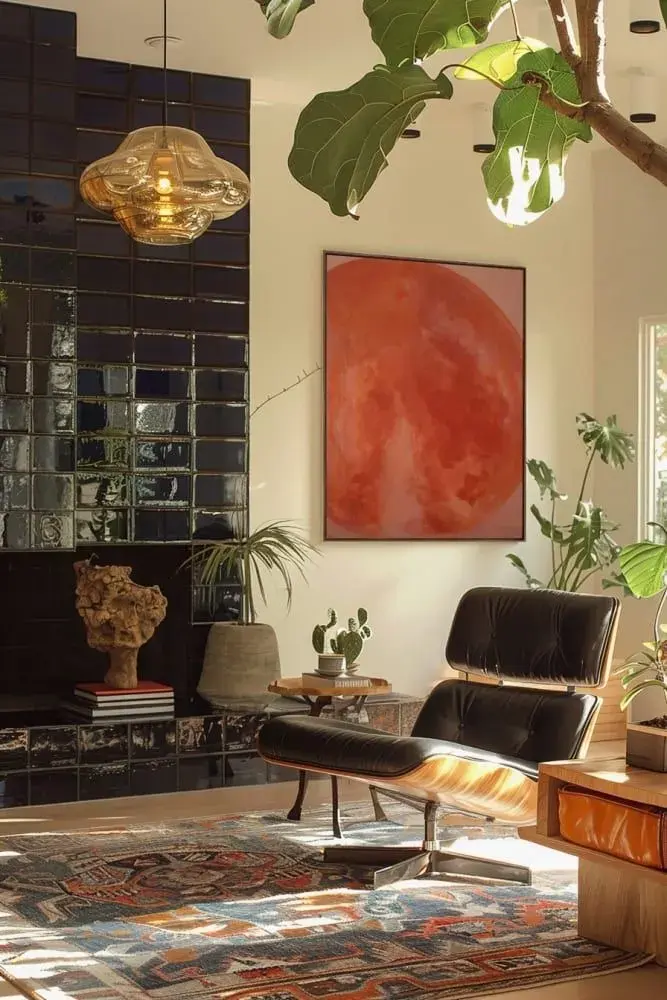
Most of the rooms I save are much harder to read. There might be a beautifully made chair beside a very ordinary table lamp, an original artwork above an inexpensive sideboard, or a £20 vase sitting on a piece of furniture that will probably still be there in thirty years.

That is the part of high-low decorating that interests me. The aim is not simply to spend less. It is to work out where spending more genuinely makes a difference, then allow everything around it to come from wherever you happen to find something good.

A well-balanced room should make the budget surprisingly difficult to read. Here are five ways I would approach it.
1. Spend on the thing that establishes the room
If there is one place to put more of the budget, make it something with enough physical presence to establish the room.
A beautifully proportioned sofa, an unusual chair, a substantial rug or a solid timber table can do much of the work before anything else arrives. Once that anchor is in place, the supporting pieces do not need the same price tag.

Hug Rug Retro Deco Rug in Tan - £180+
The Hug Rug Retro Deco Rug in Tan, from £180, is a good example. It is made from 100% wool, hand-tufted and carved, with curved areas of green, ochre, brown and cream. There is enough colour, texture and shape here to build a room around it.

Beside it, something much simpler works well. The Lights 4 Living Endon Amalfi Satin Nickel Floor Light, £33, has a slim metal form that gives you a little of that 1960s and 70s utilitarian feeling without competing with the rug.

Then add something old. A small piece such as the Smooth Decorator Matthew Turnbull amber glass posy vase, £30, introduces a material and history that neither of the new pieces has.
A £180 rug, £33 lamp and £30 vintage vase all occupy completely different parts of the budget, but none feels out of place.

If you want to take this idea further, a statement chair is another obvious place to invest. The Zara Home Leather and Stainless Steel Accent Chair, £539, has exactly the kind of sculptural silhouette that can carry a room. Put something like that beside a very plain table rather than trying to match it with equally distinctive furniture.
The expensive piece gets to establish the shape. Everything else only needs to support it.
2. Let materials connect completely different price points
Price is surprisingly difficult to read when the materials in a room make sense together.
A mass-produced stainless-steel vase can look entirely at home beside a more expensive chrome table. An inexpensive linen cushion can soften a beautifully made leather chair. A £30 piece of coloured glass can pick up the colour in an original painting.
Instead of asking whether two things feel equally luxurious, look for one material relationship between them.

H&M Home Stainless Steel Vase - £19.99

The H&M Home stainless steel vase, £19.99, and the Zara Home polished stainless steel side table, £159.99, are useful examples.
They sit at three noticeably different prices, but the repeated metal finish connects them. Crucially, they are not versions of the same object and they do not form a matching set.
I would almost always rather put a very simple inexpensive object beside an expensive design than buy a cheaper imitation of the expensive one. A £20 steel vase can echo the material of a beautiful chrome table without pretending to be anything more than a £20 vase.
The same principle works with almost anything. Walnut can appear in an investment table and a cheap picture frame. The ochre in a good wool rug can return in a ceramic bowl. A leather chair can be picked up by the warm brown of an old piece of pottery.
Your eye notices the relationship before it notices the receipt.
3. Use vintage to make price harder to read
Vintage is probably the easiest way to make high-low decorating work.
Once something has age, patina or an unfamiliar maker attached to it, its value becomes much harder to judge visually. A £35 second-hand ceramic can have more presence than a £200 new accessory simply because you cannot immediately place where it came from.
This is particularly useful in a room containing recognisable new pieces.
If you have a contemporary sofa, high-street lamp and new rug, one old chair, painting, glass vase or piece of studio pottery interrupts the sense that the room has been bought as a collection.

The Smooth Decorator vintage Japanese mixed-metal horse plaque, £50, is a good example. Its relief surface, warm metals and age give it a visual weight that has very little to do with its price.

Set it against something much larger and more contemporary, such as the HomeSpace Direct Extra Large Moderno Painting on Linen, around £266, and the difference in price is not particularly important.
A £50 vintage object can hold its own beside a much larger contemporary purchase because provenance, material and unfamiliarity all complicate our perception of value.
Vintage does not always have to occupy the inexpensive side of the room, either. Sometimes the old thing should be where you spend the most.
A very good vintage chair, an original artwork or an unusually beautiful piece of furniture may be the investment, while the lamp, cushions and little table around it are all relatively accessible. That is part of what makes an interior feel collected. The hierarchy keeps changing.
4. Spend where you can see or feel the difference
Not every category benefits equally from extra money. There are places where material, construction and craftsmanship are immediately noticeable. Upholstery, substantial wooden furniture, rugs and certain textiles are obvious examples.
Then there are objects where an inexpensive version may do exactly what you need it to do. A simple glass vase does not necessarily need a pedigree. Neither does every cushion cover, candleholder or little table.
The useful question is: what am I actually paying extra for?

The LOOMY Tillie Chunky Wool Throw, £209, makes a good case for spending more. It is hand-loomed in Peru from 100% wool, with a thick woven texture and fringe. Material and construction are part of the object.

Contrast that with the HomeSpace Direct Herringbone Recycled Cotton Throw, £21.99. It is a simple 100% recycled cotton throw with a restrained herringbone weave.
The second throw does not need to imitate the first. They can do completely different jobs.
One might be the tactile piece you keep for years. The other might simply introduce another layer of colour or pattern.
There is another version of high-low decorating that costs even less: alter the inexpensive thing yourself.

Rust-Oleum Grounded Furniture Paint - up to £19.99
A tin of Rust-Oleum Grounded Furniture Paint, up to £19.99, can turn a cheap second-hand side table or cabinet into exactly the colour the room needs. Grounded is a muted green with brown undertones, which makes it particularly easy to use with dark timber, chrome, wool and vintage glass.
Sometimes the cheapest piece in the room can be the one you have changed yourself.
Spend more when you are paying for better wool, solid timber, hand construction, original artwork, unusual design or something you genuinely expect to keep for decades.
If the extra money is mostly paying for the name attached to an otherwise ordinary object, I would probably put the budget somewhere else.
5. Repeat the thing you like, not the amount you spent
Once an investment piece comes home, you do not need to keep matching its price. You need to work out what made you like it.
If it is a dark walnut chair, perhaps it is the warm brown that matters. Repeat the colour in an inexpensive cushion, frame or piece of pottery. If it is a green rug, bring the green back somewhere else in the room through glass or paint. If you have fallen for a sculptural chrome table, a simple stainless-steel vase across the room may be enough to connect everything.

The Henry Holland Studio Green & White Marble Maxi Origin Vase, £345, has a particularly strong colour and material identity. Handmade in the brand’s London studio, it uses coloured earthenware and a Nerikomi technique to create the swirling, stone-like green and white pattern. The clay is recycled from Henry Holland Studio’s existing collections, so each vase has a slightly different surface. At 33cm tall and wide, it is substantial enough to act as a proper focal point rather than simply another accessory.
The same green can then appear elsewhere at completely different price points.

The Smooth Decorator uranium green glass vase, £70 picks up the colour through an entirely different material and period.
Then take it somewhere much cheaper again with the Rust-Oleum Grounded Furniture Paint, up to £19.99, perhaps on a second-hand bedside table, little cabinet or occasional table.
£345 handmade contemporary ceramic. £70 vintage glass. £19.99 tin of paint.
The connection comes from the colour rather than the expenditure.
This is where affordable pieces really earn their place. They can carry the colour, shape or material of something important across the room without introducing another major purchase. The repetition does not need to be exact, either. A green glass vase does not have to match the ceramic precisely. It only needs to belong to the same conversation.
The room does not need to reveal the budget
The best high-low interiors eventually become difficult to decode.
Spend more where the material, construction, provenance or design makes enough difference that you will still care about the piece years from now. Spend less on the supporting things. Buy old things when they are better than either option. Paint the cheap table. Keep the ordinary vase.
And when something expensive comes home, resist the temptation to make everything around it equally important.
A very good chair might need nothing more complicated than a cheap lamp, an old bowl and somewhere to put your coffee.
Some links in this post are affiliate links, which means I may earn a small commission if you make a purchase through them, at no extra cost to you. I only include pieces I would genuinely choose for the edit.


Comments