Marimekko 1951-1968: Armi Ratia, the Early Designers, and the Prints That Turned a Company into a Movement
The First Dress
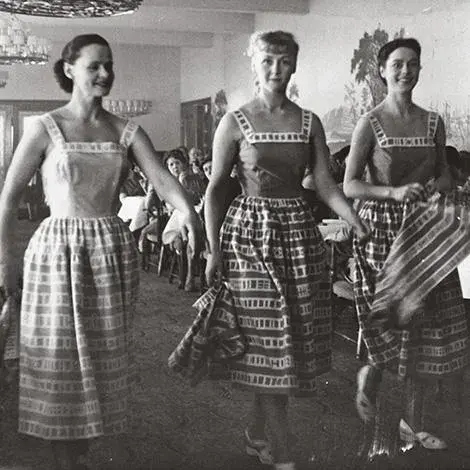
The first Marimekko fashion show was held in Helsinki in 1951, a result of Viljo Ratia purchasing a failing oilcloth printing factory called Printex two years earlier. The oilcloth industry was not what it had been, and his wife, Armi Ratia, had come up with the solution. She had trained at the Art Industry Central School and worked in advertising, and her solution was printed cotton. She asked a group of young artists to apply their graphic designs to fabric, and then commissioned a line of simple dresses to be made from it.
Finnish consumers at the time were used to the body-shaping, meticulously tailored garments that had become fashionable postwar. The Marimekko dresses were loose, bright, printed in bold patterns, and fitted most body types. In Finland, colour had been in short supply for almost a decade, and that fact combined with the comparably low cost of the dresses, helped make them a commercial success.
The name Marimekko was registered in 1951, a combination of “Mari”, Armi’s middle name, and “mekko”, the Finnish word for a simple working dress. The company would grow over fifteen years into the well established brand we know today, and its story is the story of two designers and a woman who wanted to prove that printed textile was more than just a product.
Printex
Understanding the context in which Marimekko was founded is important to understand the impact it had. Domestic textiles in postwar Finland consisted mainly of small-scale floral prints, cautious geometric patterns, and muted colours. They were playing it safe, and Armi Ratia, who had spent time studying in Germany, thought that domestic life should be more colourful and confident, and less deferential to convention.
The artists Ratia recruited to design for Printex and then Marimekko were mostly young women who had trained at art school and weren’t massively interested in the textile design conventions of the time.The prints they produced were immediately different in character from what else was available, with a larger scale and more saturated in colour. Armi wanted the designs to be legible from a distance in a way that the normal small-scale repeat patterns were not, in a way that could draw people in or start them asking questions.
Vuokko Nurmesniemi
Vuokko Eskolin joined Marimekko in 1953 as its first permanent clothing designer. She was twenty-three and would stay with the company until she left in 1960 to establish her own label, Vuokko Oy, in 1964. Her seven years at Marimekko established the visual language of the company’s garments so strongly that it would still be legible long after she moved on.
Postwar fashion was structured, body-conscious, and labour-intensive, it was assumed that women who had the time to be dressed carefully would have figures to fit the clothes. Vuokko designed with a different assumption: that the clothing should accommodate the body rather than the other way round. Her garments were unstructured, with minimum detailing, and cut to be put on quickly and worn comfortably, not requiring a certain posture or figure.
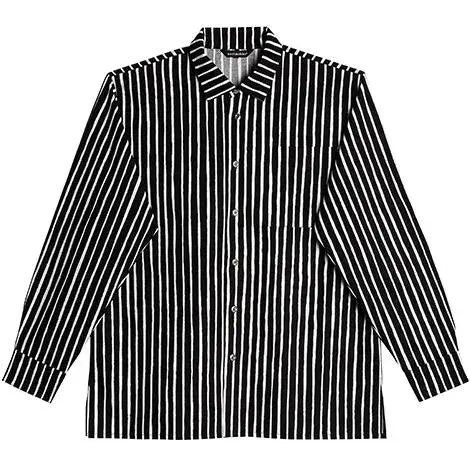
Her most enduring contribution was the Jokapoika shirt, designed in 1956 and still available today. The name means “every boy” in Finnish, and it was designed to be worn by anyone regardless of gender. The shirt itself was a simple, vertically striped cotton shirt which was available in multiple colour combinations, and it became a kind of emblem for a generation of Finnish students and academics. Cindy Babski, writing in the New York Times, noted that for people who came of age in the 1960s, Marimekko represented an image and an era as well as being a brand, and the Jokapoika shirt was a contributing factor to this.

Maija Isola
Maija Isola started working for Printex in 1949 aged twenty-two after graduating from the Ateneum art school in Helsinki. By the time Vuokko left in 1960, Isola was already the principal textile designer, having been producing patterns for over a decade.
Isola was born in Riihimäki in 1927 and grew up in a Finland that showed restraint in its domestic design. Her early patterns for Marimekko, including Lumimarja and Kivet, both from 1956, departed immediately from the contemporary norms.
She worked primarily from observation of the natural world and from the abstract art she’d encountered at art school and through international exhibitions. Her process involved extensive research, direct observation of plant forms, and a consistent willingness to abandon botanical accuracy in favour of graphic impact.
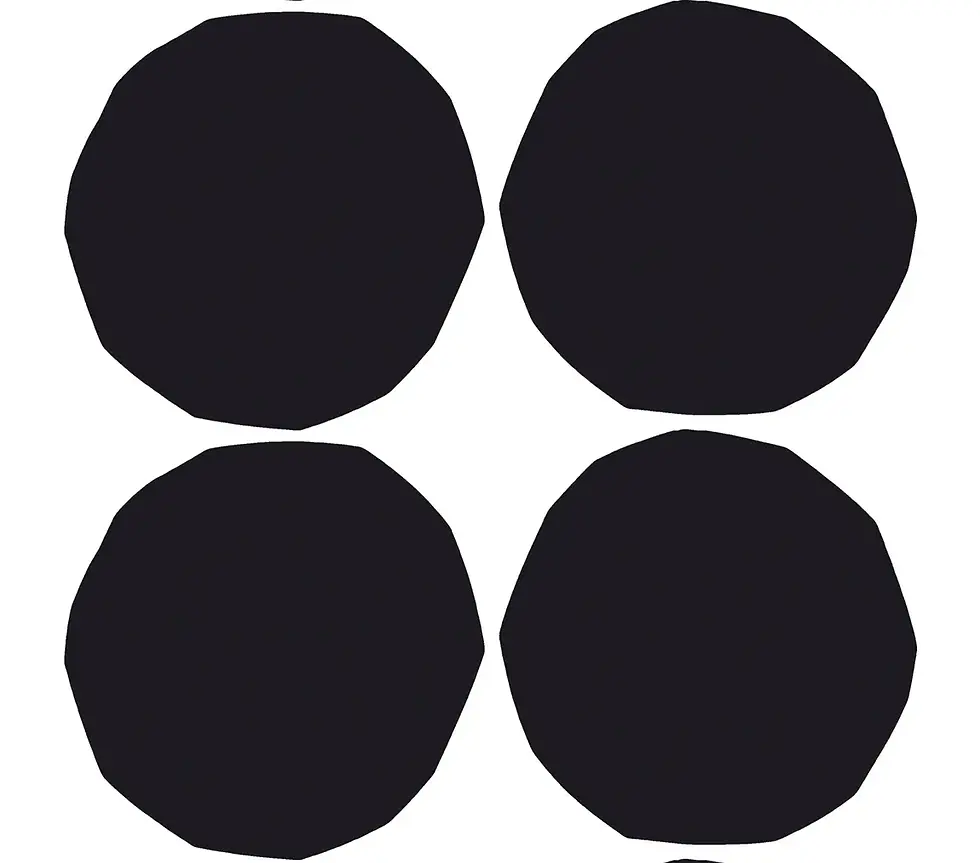
Over her thirty-eight years at Marimekko, she designed more than five hundred patterns. The breadth of this output makes her style difficult to summarise, it includes geometric abstractions, stylised natural forms, folk art references, purely graphic compositions and prints inspired by her travels in France, Algeria, and the United States. Her patterns don’t share a subject, but all have a large format approach, with a restricted palette and high contrast.
The American Market
In 1958, an American architect named Benjamin Thompson, founder of Design Research in Cambridge, Massachusetts, encountered Marimekko fabrics and dresses at the Brussels World’s Fair. He brought them back to Design Research, where they were an immediate success with the Cambridge academic and architectural community, people who wanted clothing that was not fashion in the conventional sense.
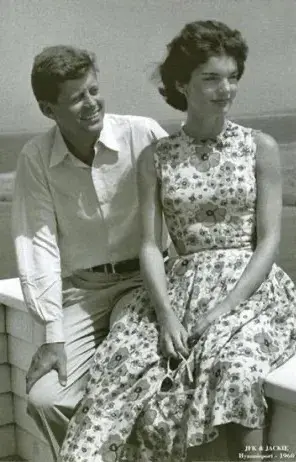
In 1960, when preparing for the Presidential campaign, Jacqueline Kennedy bought seven Marimekko dresses. The purchase was reported in three hundred American newspapers, meaning that the Marimekko brand was exposed t a readership of tens of millions. The American market that developed from this was significant enough to change the company’s production, and by 1968 Marimekko had approximately four hundred and fifty employees, and had won the Neiman Marcus Award, the American fashion industry’s most prestigious honour. Armi Ratia was awarded the Order of the Rose, Finland’s highest honour, the same year.
The Design Philosophy
Armi Ratia is sometimes described as a designer, which isn’t exactly accurate. She did design some early patterns, such as the Tiiliskivi brick print which ran from 1952, but her main contribution was the concept of the printed textile company becoming a cultural project.
This distinction may sound abstract, but it had concrete consequences for how the company was run. Marimekko clothing models in the early years were friends, employees, and ordinary women of various ages and sizes instead of professional models, with the garments designed to fit real bodies rather than idealised ones, and prints chosen for their impact rather than their predicted commercial success.
A lot of the company decisions in the early years didn’t make obvious commercial sense, but it built a coherent identity for the brand which didn’t yet have the resources to do that through advertising. Marimekko became well known because it made a statement against the standards of the time, and this is what helped them become successful in Finland, and then America, and then across Europe.
After her separation from Viljo Ratia in 1969, Armi Ratia stepped down as managing director of Marimekko, but returned in 1971 and remained until 1976. After her death in 1979, the company experienced a significant downturn, proving how closely its identity was bound with hers.
What to Look For
A Marimekko print from the 1951-1968 period is not difficult to identify even without a label. The scale, the colours, and the motifs work together in such a way that they are instantly recognisable. The bold designs, stripped down to minimal detail connect to the broader Scandinavian design tradition that we explored on Sunday through Kaj Franck and Arabia Finland, both Franck’s tableware and Isola’s prints were designed to contain only what they needed to remain, in Franck’s case functional, and in Isola’s recognisable as the object they represented.
Original Marimekko pieces appear in British vintage and charity shops with increasing frequency as the market for Nordic design has grown. The prints most commonly found are the ones that were produced in the largest quantities for the American market: geometric abstractions, large floral forms, and stripe variations.
The fabric from this period is almost always cotton, printed by hand using silk-screen techniques that left a quality of slight irregularity in the ink application. This irregularity is visible close up and is one of the ways of distinguishing early production from the later machine-printed pieces. Surviving fabric lengths often carry the Marimekko name and the designer’s name printed along the edge.
Garments from the period are rarer and more expensive. The construction is simple by design, and often made to be reversible. Marimekko’s early production standards were consistent. Look for the original Marimekko label, which has been in use in a similar form since 1954, designed by Helge Mether-Borgström using modified versions of Olivetti typewriter letterforms.
Further Research
Reading
The most comprehensive English-language account of the company’s early history is the catalogue produced for the Bard Graduate Center exhibition: Marianne Aav (ed.), Marimekko: Fabrics, Fashion, Architecture. It covers the founding period in detail and includes extensive documentation of the key prints and designers.
On Armi Ratia, Pekka Suhonen (ed.) Phenomenon Marimekko (Marimekko Oy, 1986) is the primary source in English, though now out of print and best found secondhand.
On Vuokko Nurmesniemi: Vuokko (Otava, 1999) covers her full career including the Marimekko years and the subsequent Vuokko Oy label.
For Maija Isola specifically, the Architecture and Design Museum Helsinki holds significant archive material and has published exhibition catalogues covering her full career. The Maija Isola: Life, Art, Marimekko exhibition (2020) produced an accompanying book available via the Architecture and Design Museum Helsinki shop at designmuseum.fi.
Visit
The Architecture and Design Museum Helsinki holds a significant collection of Marimekko prints and garments from the 1951-1968 period. The museum also holds the Maija Isola archive. Accessible at designmuseum.fi.
The Victoria and Albert Museum in London held a retrospective of Maija Isola’s work and holds pieces from the Marimekko collection in its permanent collection. The V&A collection is searchable at collections.vam.ac.uk.
The Cooper Hewitt, Smithsonian Design Museum in New York holds Marimekko textiles from the early American expansion period. Searchable at collection.cooperhewitt.org.
Marimekko now operates retail stores internationally, including in the UK. The current collection is the quickest way to understand the visual logic of the brand, even at sixty years’ distance from the period this article covers. The Unikko print, in continuous production since 1964, looks now much as it did then.
Sources
On the founding: Marimekko was founded by Armi and Viljo Ratia in Helsinki on 25 May 1951, as an outgrowth of Printex, the oilcloth printing company Viljo had purchased in 1949. Confirmed by the LoveToKnow fashion history entry. The first fashion show in 1951 and the context of postwar Finnish design are confirmed by the encyclopedia.com entry on Armi Ratia and the Bard Graduate Center catalogue description.
On Vuokko Nurmesniemi: Joining Marimekko in 1953 and leaving in 1960 to found Vuokko Oy. The Jokapoika shirt designed in 1956. Confirmed by the Encyclopedia of Design entry on Marimekko.
On Maija Isola: Born in Riihimäki in 1927, died in 2001. Joined Printex in 1949, joined Marimekko 1951, remained until 1987. Over 500 patterns. Confirmed by FinnStyle, and the Scandinavian Design biography. Lumimarja and Kivet designs from 1956 confirmed by Marimekko archive sources.
On the American expansion: Benjamin Thompson’s encounter with Marimekko at the 1958 Brussels World’s Fair confirmed by LoveToKnow. Jacqueline Kennedy’s seven dresses and the 300-newspaper coverage confirmed by LoveToKnow and Washington Post. The 1968 Neiman Marcus Award and Order of the Rose confirmed by encyclopedia.com entry on Armi Ratia.
On Armi Ratia’s biography: Born 1912, graduated Art Industry Central School 1935, died 1979. Separated from Viljo 1969, stepped down as managing director 1969, returned 1971, retired 1976. Confirmed by encyclopedia.com.
Closing Note
Armi Ratia said that Marimekko could just as well have been modern jazz, a flower shop, or an ice cream parlour, but what she had was fabric. What she meant by this is that the specific medium was less important than the project itself: to put more colour, more confidence, and more optimism into Finnish domestic design.
The prints that resulted, over five hundred patterns accumulated over nearly four decades of continuous productions, were the products that Ratia thought Finland deserved over the conventional pieces available at the time.
Tomorrow we’ll look at Unikko, Maija Isola’s poppy from 1964, the print Armi Ratia almost banned and that became one of the most recognisable textile designs Finland has ever produced.


Comments