More is More Again

Pattern is returning to interiors in a much more layered way. Florals are being mixed with stripes, geometrics with botanicals, and rooms are becoming less concerned with keeping every surface quiet. The easiest way into it is to think less about whether patterns “match” and more about how they relate to one another.

A useful rule is simple: mix the scale, repeat the colour.
If two patterns share a few colours, they can usually sit together quite comfortably as long as they are not competing at the same scale. A large floral on a curtain can take a smaller geometric cushion. A densely patterned lampshade works beside a broad stripe. A woven throw can add another layer without introducing a completely new motif.

Vintage pieces are particularly useful here because they give the eye somewhere to rest. Pottery, glass and wood break up expanses of fabric and stop a patterned room feeling too coordinated.

Start large
The biggest pattern in the room should usually establish the palette. Curtains and wallpaper are useful because they cover enough surface area to make the rest of the scheme feel intentional.
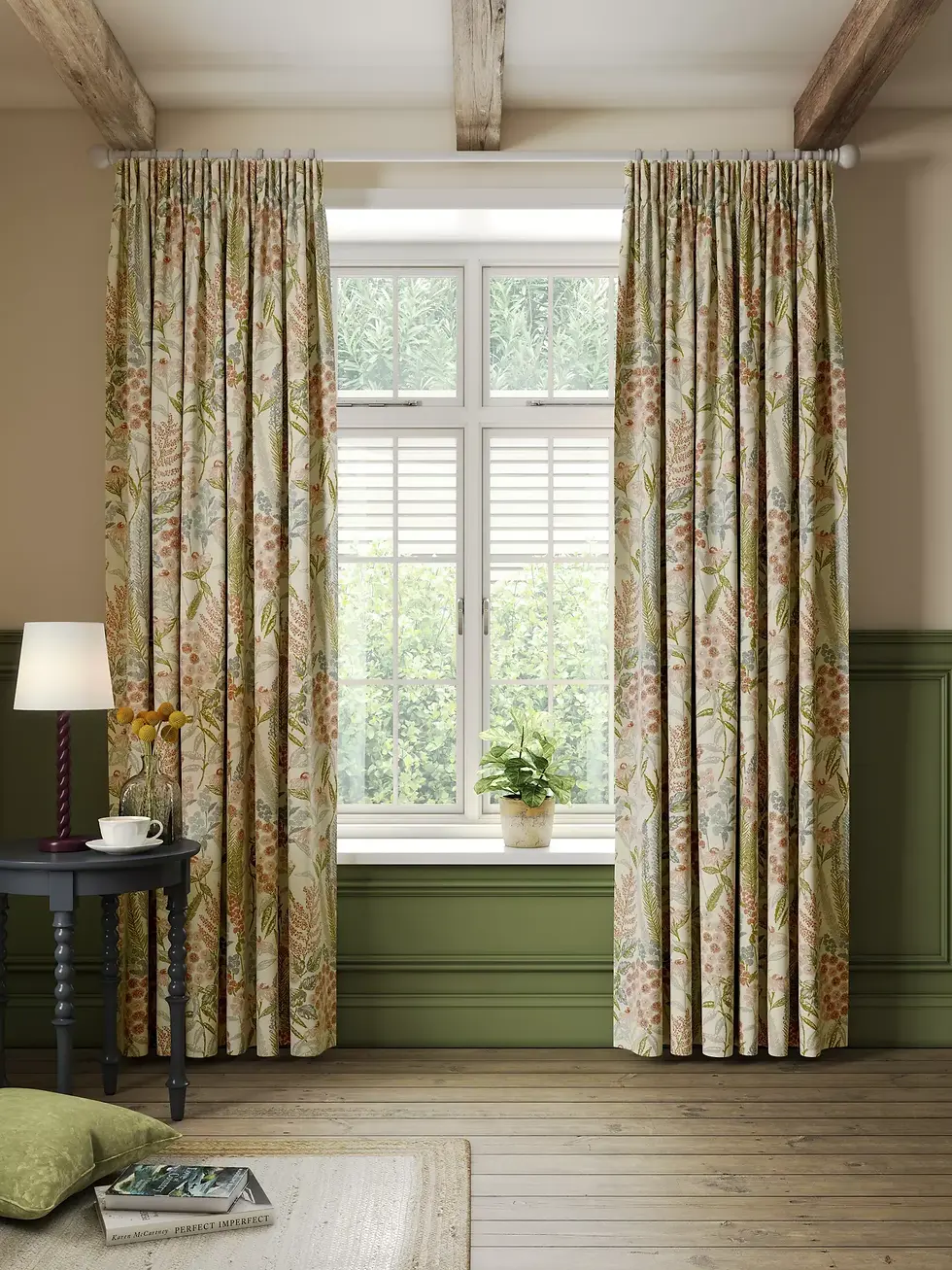
John Lewis Wildflower Weave Lined Curtains - £120 - £220
The loose floral design gives you several colours to pick up elsewhere, which makes it a forgiving starting point for layering smaller patterns.
Add a medium-scale pattern

The olive ground and repeating marigold motif are a good match for the Wildflower Weave curtains. It keeps the botanical connection, but the more regular scale gives the eye a little structure rather than creating another loose, painterly floral layer. For another option, use the Marigold cushion on an armchair rather than placing it directly beside the curtain. This spreads the pattern around the room and makes the connection feel more natural.

The John Lewis Woven Check Cushion in Avocado, £45, would also work well if you want the room to feel more relaxed and less overtly floral. For a slightly stronger geometric alternative, the Sleek Furniture Sage Green Diamond Cushions, £34 for two, introduce a regular repeat while keeping the green running through the scheme.

Bring pattern into the lighting
A lampshade is one of the easiest places to be slightly braver because the amount of fabric is relatively small.

The tiny floral repeat works well against the larger, looser botanical pattern of the curtains. Its mulberry tones also give you another colour to pick up elsewhere in the room without introducing a completely separate palette.

The compact floral repeat works particularly well beside larger botanical patterns, especially when the pink and green tones are repeated elsewhere in the room.
Use texture as another layer
Pattern does not always need to come from print. A woven or jacquard surface adds movement in a quieter way and helps separate two stronger motifs.

The floral jacquard has enough pattern to contribute to the room while the wool texture keeps it softer than a printed textile.

The herringbone weave introduces another pattern through the construction of the textile rather than a printed motif. The sage green repeats the botanical palette, while the wool and fine fringe give the eye a softer surface between the stronger florals.
Let the floor join in
Once the colours are established, a rug can introduce another pattern without making the room feel too busy, particularly when its tones are slightly muted.

Hug Rug English Garden Eco-Washable Rug - £205.99+The woodblock-style floral border and leafy trellis introduce another scale of botanical pattern, while the green, rust and cream palette gives you several colours to repeat through the rest of the room.
Give the eye somewhere to pause
A patterned room needs areas where colour and texture take over from print.

The warm speckled glaze and simple hand-thrown form provide a quieter surface between stronger textiles. It works particularly well with greens, ochres, rusts and creams, all colours that tend to recur naturally in botanical schemes.
This is where vintage pottery, wooden boxes, plain glass and small metal objects become especially useful. They interrupt the pattern without making the room feel empty.
The easiest combination to try
If you are nervous about mixing print, start with three:
one large floral
one smaller geometric or repeat
one stripe or woven pattern
Choose a colour that appears in all three and let that connect them.
From there, add plain or lightly textured objects around them. A brown ceramic bowl, an amber glass vase or a dark wooden frame can often make two patterns that initially seemed unrelated suddenly feel at home together.
The aim is to create enough repetition that the room feels coherent, while keeping enough variation that it still feels as though it developed over time.
Affiliate disclosure: Some of the links in this post are affiliate links. If you choose to buy through them, Smooth Decorator may receive a small commission at no extra cost to you.


Comments