The Coloured Glass Revival

Coloured glass has become one of the easiest ways to bring personality back into a room. It catches light, introduces colour without the commitment of paint or upholstery, and works particularly well when different periods and makers are mixed together.

Murano and Murano-inspired glass are among the vintage styles being singled out for 2026, alongside a broader return to irregular silhouettes, decorative surfaces and expressive objects. (homesandgardens.com)

The best pieces often work somewhere between object and sculpture. A twisted stem, a freeform rim or a mottled surface can be enough to make a small bowl or vase hold its own on a shelf. Colour behaves differently in glass too. Cobalt becomes almost inky against dark wood, amber warms up beside walnut and oak, while turquoise and pink become much brighter when daylight passes through them.

Cobalt blue
Blue glass has enough intensity to anchor a shelf or table without needing much around it.

The saturated cobalt bowl and twisted pedestal give this piece a strong sculptural quality, making it especially effective against dark timber, warm neutrals or ochre textiles.

For a newer take on the same idea, M&S Bright Colour Glass Vase, £19.50, uses a clear and vivid blue palette in a simpler contemporary form. It gives you the same hit of saturated colour at a more accessible price point and is currently available to add to bag.
Pink and mottled glass
Pink glass works particularly well when the colour is softened by mottling, bubbles or a heavier handmade surface.

The rounded bottle form and mottled pink surface give this vase a softer presence than clear jewel-toned glass, making it easy to use on a bedside table, bookshelf or dressing table.

The deep plum-pink glass and sculptural twisted form give it much more presence than a plain pink vase, while the way it catches and refracts light fits perfectly with the article’s focus on coloured glass as a decorative object in its own right.
Turquoise and teal
Blue-green glass has a particularly good relationship with brown wood, brass and natural fabrics. It can feel bright without becoming too sharp.

The aventurine shimmer and flowing freeform shape give this bowl the kind of movement that makes art glass feel closer to sculpture, especially when displayed on its own.

The lower, organic form makes this a quieter way to introduce coloured glass, while the teal tone is strong enough to register against timber, books or ceramics.

The sculpted turquoise glass base gives the lamp enough colour and transparency to behave like a decorative glass object even when it is switched off, while the antique-brass plinth and natural linen shade make it easy to place alongside vintage teal and blue glass. It is currently available to add to basket.
Amber and Orange
Amber and orange glass bring warmth in a slightly different way to pinks or greens. Where cooler tones can feel crisp or playful, these shades feel deeper, earthier, and more atmospheric. They catch the light softly, throw a warm glow in the evening, and sit particularly well with wood, aged brass, linen, and darker upholstery.
Used well, amber and orange glass can make a room feel more layered without becoming loud. An amber vase or lamp adds richness almost like a polished wood tone would, while stronger orange glass introduces a slightly more expressive note. Both have a way of feeling decorative without losing their usefulness, which is part of what makes them so easy to live with.

Its warm amber tone and gently flared form make this an easy piece to layer with wood, ceramics and metal without making the scheme feel overly colourful.

The rounded, irregular form gives the amber glass a softer, more organic presence, while the warm tone works especially well with oak, walnut, rust and cream. It is a good contemporary counterpart to vintage amber glass because the shape still feels slightly individual rather than overly formal.
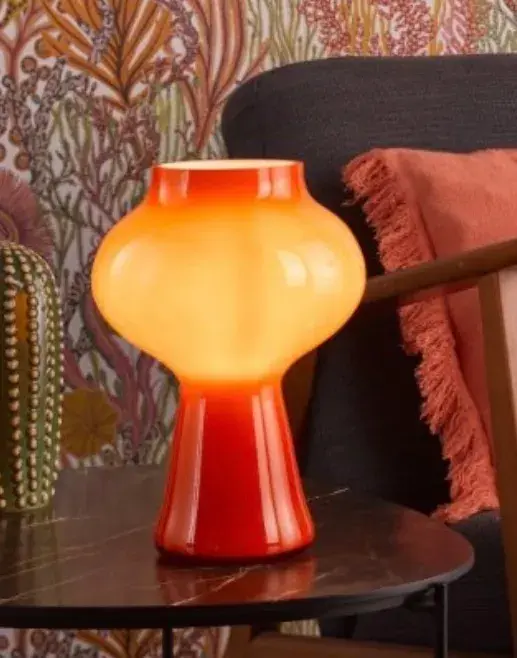
For a bolder version of the same idea, orange art glass brings a little more presence. The Chrissy lamp feels slightly more playful and sculptural than the amber pieces, but it still sits comfortably within the same family of warm, light-responsive colour.
Confetti and mixed colour
Some of the most successful coloured glass mixes several colours at once. These pieces are useful when you want the object to pull together tones already scattered around the room.

The hand-blown tortoiseshell glass brings several warm tones into a single surface, while the secondary light inside the base makes the pattern more pronounced once the lamp is switched on. Antique brass and a simple white linen shade keep the rest of the design restrained enough for the glass to remain the focus.

These smaller pieces are a useful way to scatter colour through a room rather than concentrating it in one large vase. The confetti pattern also gives them a slightly playful, handmade quality.
How to use coloured glass
The strongest displays usually mix tone, scale and age. A cobalt compote, an amber posy vase and a low turquoise dish will usually feel more interesting together than several pieces from the same range. Keeping some space around each object helps the colour and silhouette remain visible.
Light matters too. Windowsills, shelves near lamps and darker wooden surfaces all bring out different qualities in glass. Transparent colours benefit from backlighting, while denser cobalt and teal pieces often look particularly good against cream, brown or olive backgrounds.
Coloured glass is easy to collect precisely because the pieces do not need to coordinate. A single vintage bowl can be enough to start with, and newer pieces can be added where the colour, shape or surface feels right.
The result is a room with small points of colour that reveal themselves gradually as the light changes.
Some of the links in this post are affiliate links. If you choose to buy through them, Smooth Decorator may receive a small commission at no extra cost to you.


Comments